
How Much Does It Cost to Install Solar Panels in Ireland?
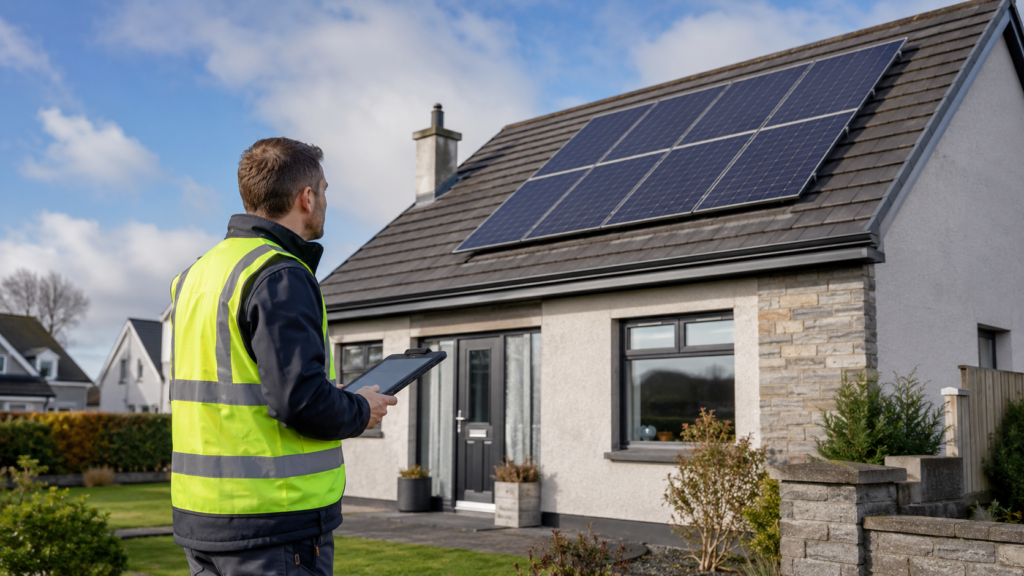
Solar panels are becoming a more common feature on homes, farms, schools, offices and commercial buildings across Ireland. With electricity costs still a concern for many households and businesses, solar PV is now seen as a practical way to reduce energy bills, generate cleaner electricity and make better use of available roof space.
The question many people ask first is simple: how much does it cost to install solar panels in Ireland? The answer depends on the size of the system, whether battery storage is included, the type of property, roof access, electrical work and any grant support available.
As a broad guide, domestic solar panel systems in Ireland are often quoted somewhere in the region of €6,000 to €16,000 including installation, depending on the specification and property. Some Irish solar guides put a typical household installation closer to €7,000 to €10,000 after grants, but the final price will vary from one home or business to another.
What affects the cost of solar panels?
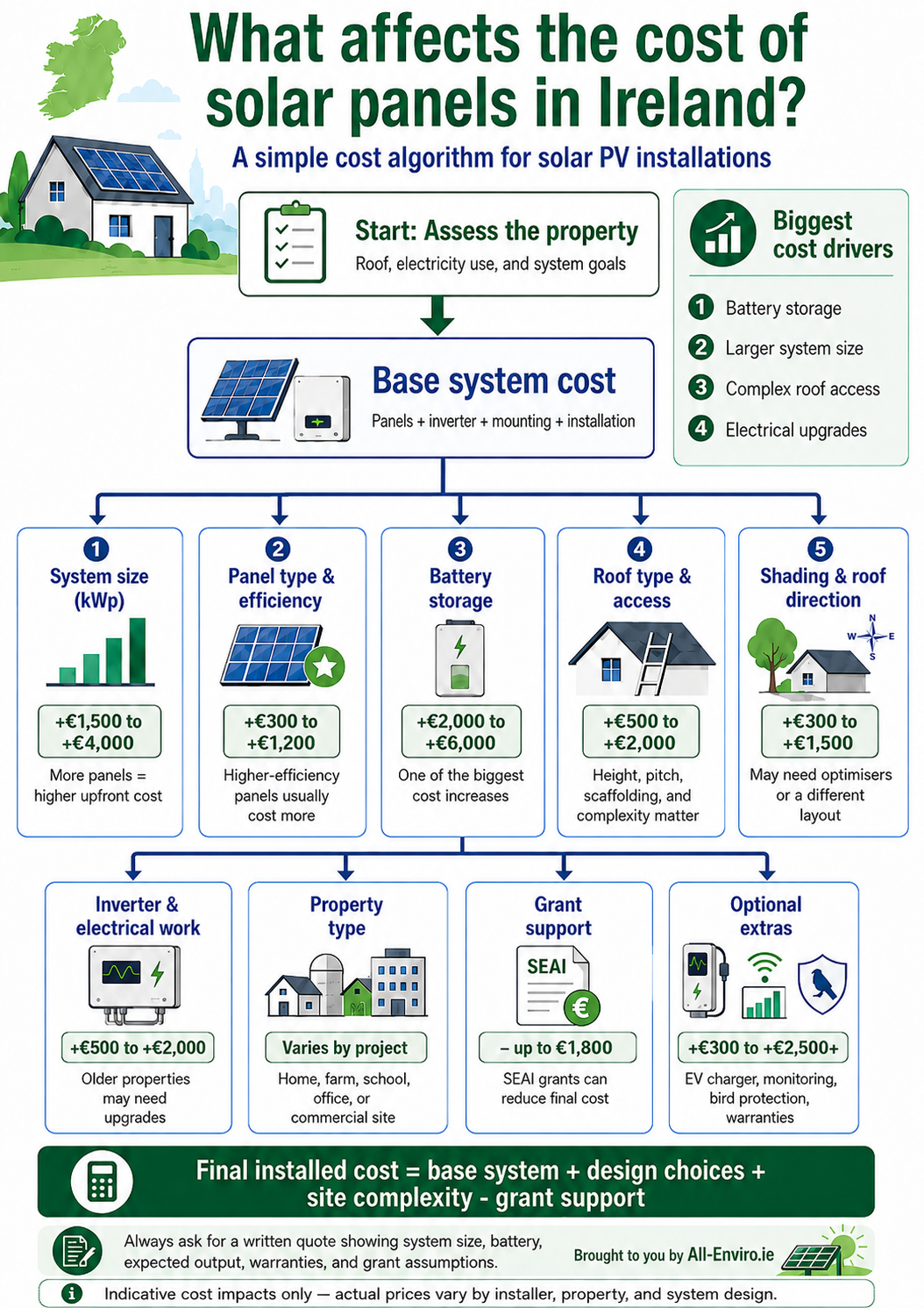
The cost of solar panels in Ireland is usually based on the full system design rather than a flat price per property. A smaller system with no battery will normally cost less, while a larger system with battery storage, a more complex roof layout or extra electrical work will cost more.
A typical solar PV quote may include the solar panels, inverter, mounting system, installation, monitoring equipment and electrical safety components. Optional extras such as battery storage, EV charger integration, bird protection or extended warranties can increase the final price.
The main factors that affect the cost include:
| Cost factor | How it affects the price |
|---|---|
| System size | More panels and a larger system usually mean a higher upfront cost. |
| Panel type and efficiency | Higher-efficiency panels may cost more but can be useful where roof space is limited. |
| Battery storage | One of the biggest optional cost increases. |
| Roof type and access | Height, pitch, scaffolding and roof complexity can affect labour and access costs. |
| Shading and roof direction | Shaded roofs may need optimisers or a different panel layout. |
| Electrical work | Older properties may need additional wiring or consumer unit upgrades. |
| Property type | Homes, farms, schools, offices and commercial buildings may need different system designs. |
| Grant support | Eligible grants can reduce the final cost. |
| Optional extras | EV chargers, monitoring, bird protection and maintenance packages can add to the price. |
What does kWp mean?
Solar PV systems are normally measured in kWp, which stands for Kilowatt Peak.
It is the standard unit of measurement used to describe the maximum power output a solar panel, or a full solar PV system, can generate under ideal, standardised laboratory conditions, such as bright, direct sunlight.
For example, a larger kWp system will usually include more panels and may generate more electricity over the course of a year. However, actual performance will depend on the property, weather, roof direction, shading and how much of the electricity is used on site.
Solar panel cost algorithm
A simple way to think about solar panel pricing is:
Final installed cost = base system cost + design choices + site complexity − grant support
The base system cost normally includes the solar panels, inverter, mounting equipment and installation. The final installed price then changes depending on the size of the system, whether a battery is included, roof access, shading, electrical upgrades, optional extras and available grants.
As a rough guide, some of the most common cost adjustments may look like this:
| Factor | Indicative cost impact |
|---|---|
| Larger system size | +€1,500 to +€4,000 |
| Higher-efficiency panels | +€300 to +€1,200 |
| Battery storage | +€2,000 to +€6,000 |
| Complex roof access | +€500 to +€2,000 |
| Shading / optimisers | +€300 to +€1,500 |
| Electrical upgrades | +€500 to +€2,000 |
| Property type | Varies by project |
| SEAI grant support | − up to €1,800 |
| Optional extras | +€300 to +€2,500+ |
These figures should be treated as indicative only. Actual prices will vary by installer, property, system design and the equipment chosen.
Suggested image placement: insert your “What affects the cost of solar panels in Ireland?” infographic here.
How grants can reduce solar panel costs
Grants can make a noticeable difference to the final cost of solar panels. In the Republic of Ireland, the SEAI Solar Electricity Grant is available for eligible domestic solar PV installations, with the maximum grant remaining at €1,800 in 2026.
Homeowners should always check the latest eligibility rules before assuming a grant applies. Grant availability may depend on the property, the system being installed and whether the installer is registered under the relevant scheme.
For businesses, farms, schools and public sector buildings, the grant and support options may be different from domestic schemes. It is worth speaking to an installer or energy adviser who understands the current supports available for your type of property.
What should be included in a quote?
Before choosing a solar panel installer, it is worth asking for a clear written quote that explains exactly what is included.
A good quote should show:
- the number of solar panels
- total system size in kWp
- panel brand and warranty
- inverter details
- whether battery storage is included
- expected annual electricity generation
- estimated savings
- grant assumptions
- installation timescale
- scaffolding or access requirements
- aftercare and monitoring
- any optional extras
The cheapest quote is not always the best option. A good solar panel installer should explain why they have recommended a particular system size, what savings are realistic and whether the property is suitable for solar PV.
Are solar panels worth it in Ireland?
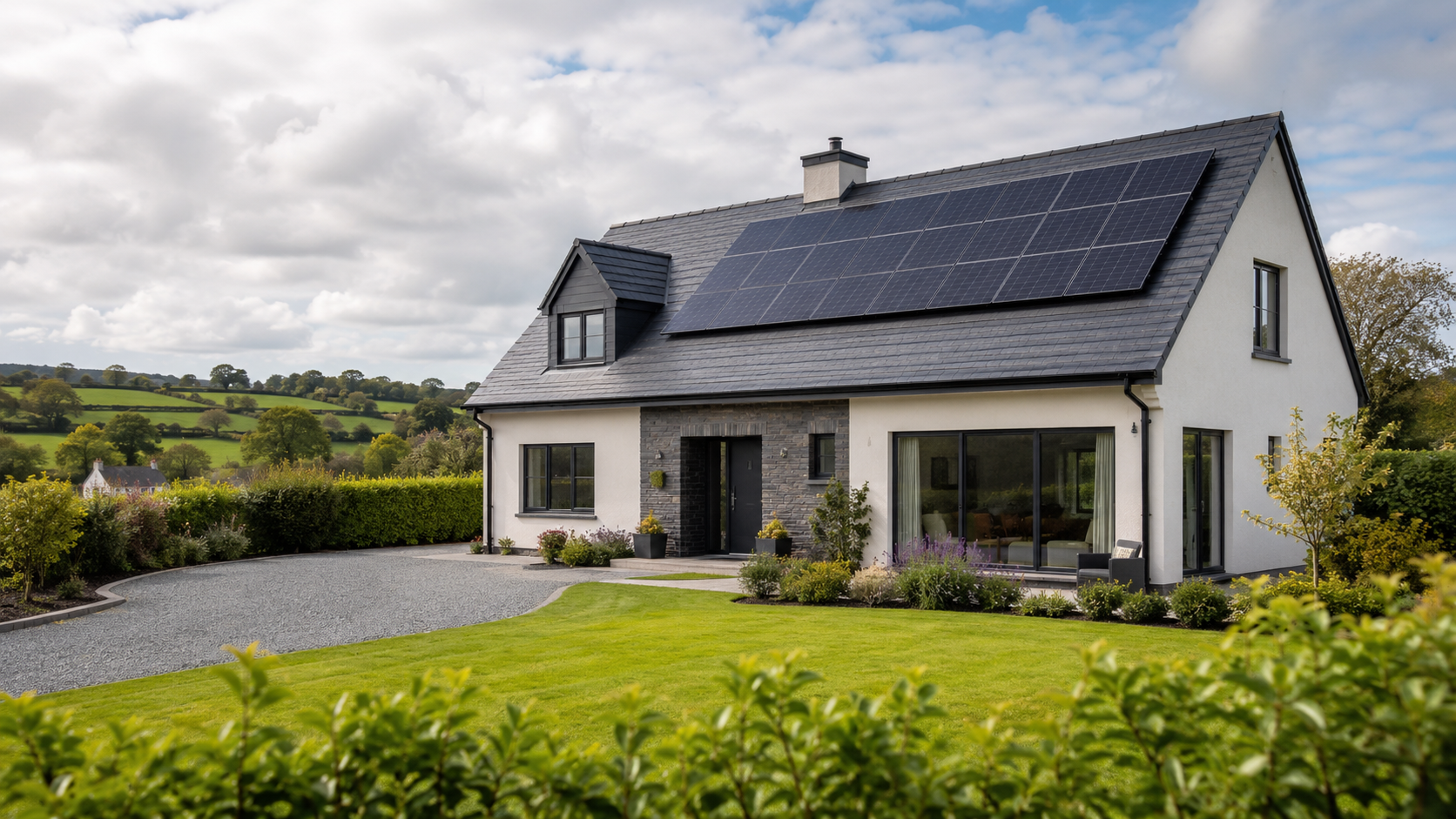
Solar panels can be worth it in Ireland, particularly for homes and businesses with suitable roof space and regular daytime electricity use.
They can help reduce electricity bills, lower reliance on the grid and support cleaner energy use. The overall value will depend on the cost of installation, available grants, electricity usage, system size, export rates and how much of the generated electricity is used within the property.
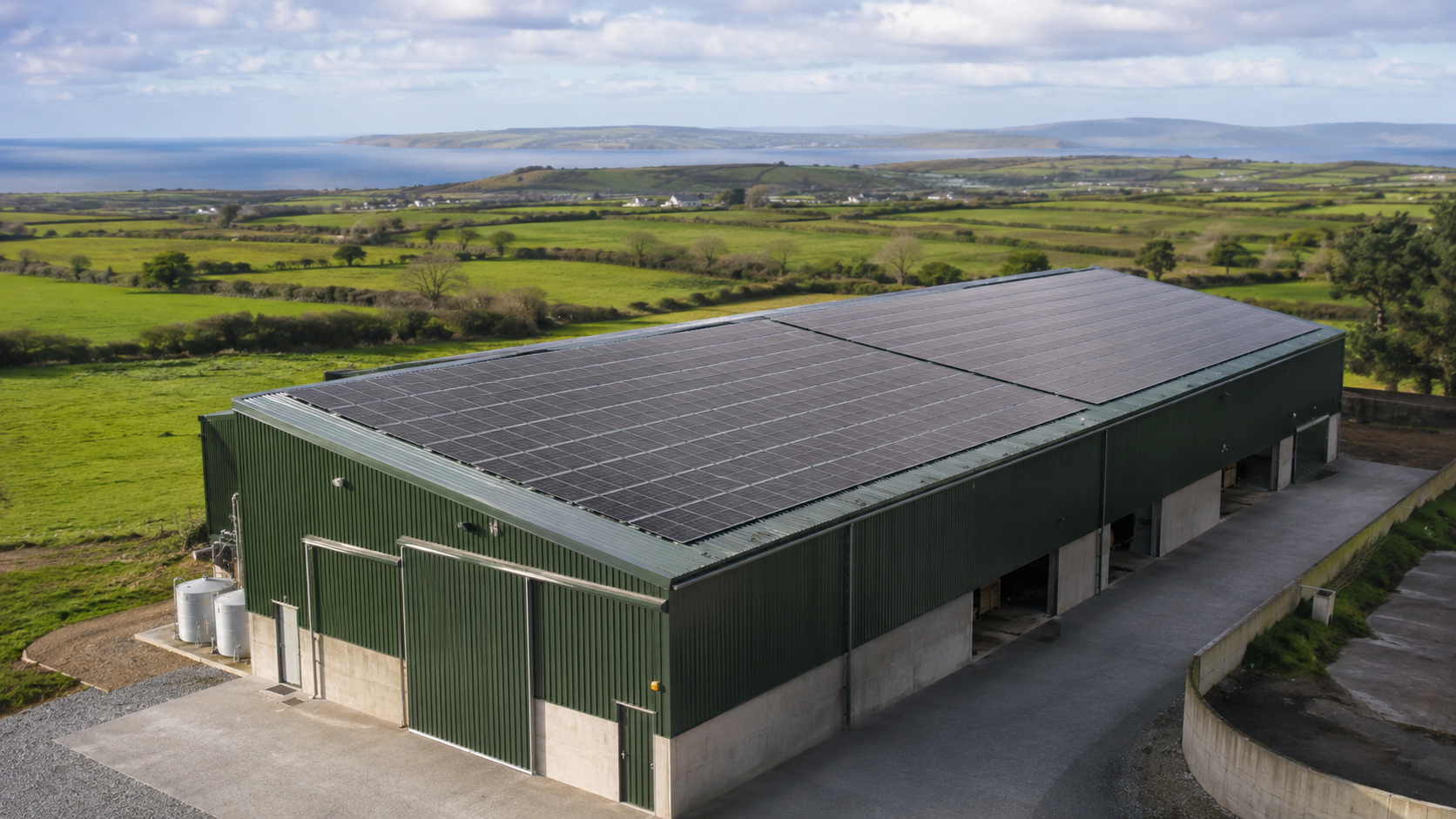
For businesses, solar panels can also support environmental reporting, tender requirements and customer expectations around sustainability. They may be especially suitable for buildings that use electricity during daylight hours, such as offices, farms, schools, workshops, warehouses and commercial premises.
Do solar panels work in Ireland’s weather?
Yes, solar PV panels work in Ireland because they generate electricity from daylight, not just direct sunshine.
Output is usually higher in brighter summer months, but panels can still generate electricity on cloudy days. Performance will depend on the time of year, panel quality, roof direction, shading and the overall system design.
Finding solar panel installers in Ireland
Because solar panel costs can vary so much, the best approach is to speak to an installer who can assess the property properly. They should look at roof space, shading, electricity usage, system size, battery options and any available grants before giving a final price.
All-Enviro lists companies involved in solar panels, solar PV installation, renewable energy systems and energy upgrades across Ireland, helping homeowners, businesses and organisations find relevant installers and suppliers.
Browse Solar Panel Installers in Ireland on All-Enviro
Are you a solar panel installer?
If your company installs solar panels, solar PV systems, battery storage or renewable energy solutions, it is worth checking that your business is listed correctly on All-Enviro.
A complete listing can help potential customers find your services, see the areas you cover, visit your website and contact your business directly.
Solar energy is a growing search area across Ireland, so having accurate business details in the right category can help your company appear in front of people actively researching solar panel installation and renewable energy options.