Budget 2026 Winners: Irish Companies Turning Climate Action Plan into Competitive Advantage
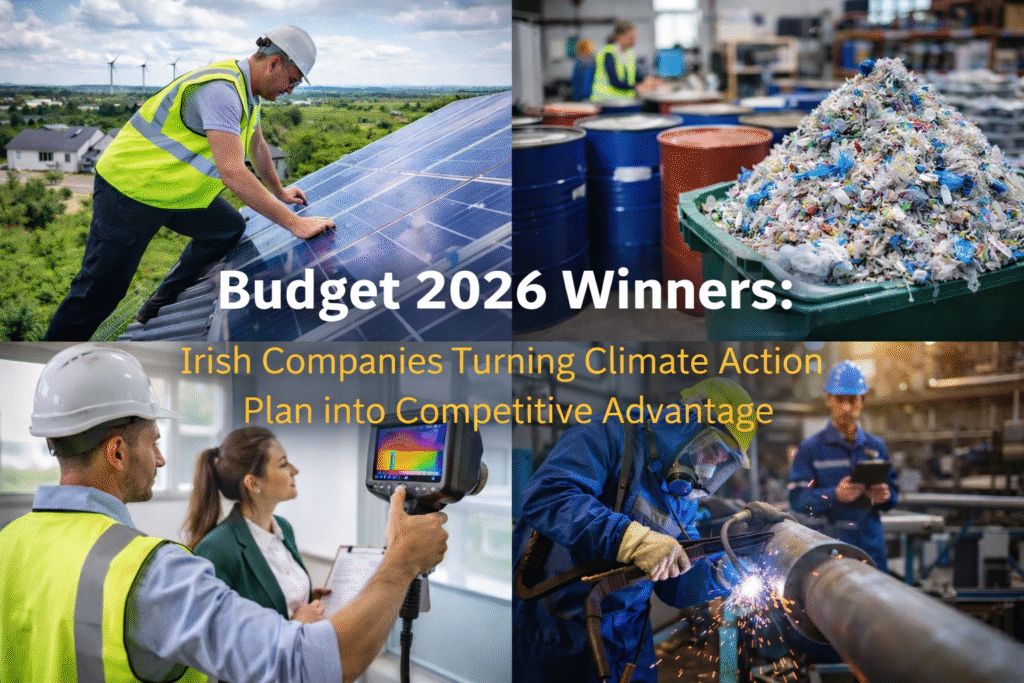
Budget 2026 Winners: Irish Companies Turning Climate Action Plan into Competitive Advantage
Budget 2026 was billed as a cost-of-living and climate budget, reflecting the growing importance of climate ireland and ireland’s climate in national policy. For many Irish businesses, it will feel like “more carbon tax, more paperwork”. But for a growing group of companies, the new measures are basically free fuel for their business model: more grants for upgrades, more demand for low-carbon products and services, and a clearer story to tell customers about their climate change adaptation efforts.
This article looks at who the real “winners” are – and how any Irish business can use Budget 2026 to move from climate compliance to genuine competitive edge, aligning with Ireland’s national climate objective.
1. What changed in Budget 2026 – in plain English
A few headline measures from Budget 2026 matter especially for business, considering climate risks and climate projections, including potential changes in snowfall and rainfall patterns:
- Over €1.1 billion for climate, energy and the environment The Department of Climate, Energy and the Environment has secured almost €1.1bn to accelerate Ireland’s energy transition, including record funding of €558m for SEAI home and community energy upgrades and solar PV and a further allocation aimed at circular economy initiatives and offshore renewables. This investment supports the country’s renewable energy goals and emissions reduction target. (gov.ie)
- Carbon tax jumps again – to €71 per tonne The carbon tax rises from €63.50 to €71 per tonne of CO₂, applying to petrol and diesel from 8 October 2025 and to other fuels from 1 May 2026. The extra revenue (about €121m in 2026) is earmarked for environmental and social programmes rather than just disappearing into the general pot. This increase aligns with Ireland’s carbon budget objectives. (Chartered Accountants Ireland)
- Cheaper energy VAT for longer The reduced 9% VAT rate on gas and electricity is now extended out to the end of 2030, giving businesses and households a bit more certainty on energy tax. This measure aims to balance climate finance considerations with cost-of-living concerns. (Squire Patton Boggs)
- More green finance and grants for business
- The Environmental Aid Scheme 2023–2026 continues, with average green grants close to €1.8m for IDA-backed projects and about €960k for Enterprise Ireland clients. (KPMG)
- Enterprise Ireland, IDA and Local Enterprise Offices are explicitly funded to support green innovation, decarbonisation and climate-readiness programmes. (Enterprise Ireland)
- SEAI has been steadily expanding business energy upgrade grants, including faster, simplified approval for smaller projects, and tens of thousands of firms have already tapped into these schemes. These initiatives support the broader climate action plan, including measures to address increased snowfall and rainfall due to climate change. (Sustainable Energy Authority of Ireland)
- SMEs in the spotlight SMEs make up over 99% of Irish businesses and are central to climate and circular-economy goals, but they’re often more constrained by finance and skills than large corporates – which is exactly what these supports are trying to address. The Environmental Protection Agency has highlighted the importance of SME engagement in achieving climate objectives and adapting to changing weather patterns, including increased rainfall. (EPA Ireland)
So yes, carbon-intensive energy gets pricier. But at the same time, low-carbon investments, retrofits and circular business models are being heavily subsidised. That’s where the “winners” are emerging, as businesses adapt to climate change impacts and extreme weather events, such as heavy snowfall and increased rainfall.
2. The real winners: business models built around climate solutions
Winner 1: Energy-efficiency and retrofit specialists
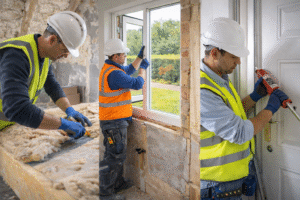
Budget 2026 piles even more money into home and community energy upgrades, plus ongoing supports for business energy efficiency. This aligns with Ireland’s climate action plan and supports the transition to renewable energy, while also addressing the need for buildings to withstand extreme weather, including heavy snowfall and rainfall. (gov.ie)
That’s good news for:
- Retrofit contractors and installers (insulation, windows, doors, airtightness)
- Solar PV companies, including those offering rooftop and car-park systems
- Heat-pump, HVAC and controls specialists
- Energy auditors and consultants
These businesses benefit in three different ways:
- More leads directly from grant schemes – homeowners, communities and SMEs are more likely to pull the trigger when there’s generous support.
- Higher-value projects – the push for whole-building performance and deep retrofits means larger scopes, not just “one more attic job”.
- Better marketing hooks – “we’ll design your upgrade to maximise SEAI / EI grants and minimise your carbon tax exposure” is a powerful pitch.
If you’re in this space and you aren’t shouting about Budget 2026 on your website, social channels and directory listing, you’re leaving money on the table and missing an opportunity to contribute to climate neutrality goals.
Winner 2: Circular economy and low-waste innovators

Alongside energy, government reports point to the circular economy as a core strategy for resilience and emissions cuts – and Budget 2026 includes a specific allocation to drive that agenda. This approach is crucial for climate change adaptation and meeting sectoral adaptation plans, especially in light of changing rainfall patterns. (gov.ie)
Irish case studies already show what this looks like in practice: from Repak’s packaging compliance scheme to The Rediscovery Centre’s upcycling of waste materials, and reuse initiatives and take-back schemes run by nurseries, reuse networks and other businesses. These initiatives demonstrate practical adaptation measures in action, helping businesses cope with climate-related challenges such as increased rainfall. (All Ireland Sustainability)
Budget 2026 doesn’t just help these pioneers – it creates demand for similar services:
- Repair, refurbish and reuse businesses (electronics, furniture, appliances, fashion) stand to win as policy nudges people away from throwaway consumption.
- Resource-management and recycling firms can position themselves as circular-economy partners, not just “waste collectors”.
- Product-as-a-service models (leasing, subscription, sharing) become more attractive as carbon-intensive ownership costs rise.
SMEs that re-design products for durability, easy repair and reuse can pitch themselves as helping larger clients hit their own climate and circular-economy targets, which are tightening under EU rules and national climate obligations.
Winner 3: Green construction, housing and property
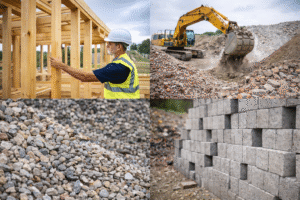
Between housing shortages, the National Development Plan and climate targets, the construction sector is under serious pressure to build more with less carbon. Budget analysis points to tax and funding measures aimed at supporting construction and infrastructure, while environmental aid schemes and climate funds are geared towards greener methods and technologies. This shift is crucial given the projected climate change impacts on Ireland’s built environment, including increased risk of snow and rainfall damage. (KPMG)
Budget 2026 winners in this space include:
- Low-carbon materials suppliers – timber construction, recycled aggregates, low-clinker cement, recycled concrete, etc.
- High-performance building designers – architects, engineers and consultants specialising in NZEB/passive-house standard for homes and commercial buildings.
- Green developers and social-housing partners – those who can combine rapid delivery with verifiably lower lifecycle emissions and resilience to extreme weather events, including heavy snowfall and increased rainfall.
As environmental requirements tighten through carbon budgets and planning guidelines, companies who can say “we’re already there” will win tenders and planning approvals faster than those scrambling to catch up. This proactive approach aligns with Ireland’s climate science-based policy direction and addresses the need for buildings to withstand changing weather patterns. (KPMG)
Winner 4: Retail and hospitality that make climate visible
Consumers increasingly want tangible signs that businesses are serious about sustainability – not just a green leaf on the menu. Budget 2026’s focus on energy transition, circular economy and climate resilience makes this even more salient for retail and hospitality, pushing these sectors towards climate neutrality and adaptation to extreme weather events like heavy snowfall and rainfall. (gov.ie)
A standout example is Lidl Ireland’s Net Zero Energy supermarket in Maynooth, which opened in November 2025:
- It’s designed to generate as much energy as it consumes annually, using a 575 kWp solar array across the roof and car-park canopy.
- The store incorporates features like a living wall, community garden and advanced deposit-return machines, and represents more than €10m investment in the local area. This approach demonstrates how retail can contribute to climate finance and adaptation, including measures to manage increased rainfall. (Lidl Ireland)
Lidl isn’t just complying with the climate action plan – it’s using climate leadership as a brand differentiator, signalling value, innovation and community investment all in one place.
Smaller retailers, cafés and hotels can borrow the same playbook on a different scale:
- Visible solar PV, EV chargers or heat-pump installations
- Clear waste-reduction and refill options
- Transparent stories about local sourcing, lower-carbon menus and circular initiatives
Budget 2026 makes those investments financially easier; smart operators will make them highly visible and align with national climate objectives.
3. How any Irish business can turn Budget 2026 into a competitive edge
You don’t have to be a solar installer or a supermarket chain to be a “winner”. Here are practical moves for almost any SME to address climate risks and seize opportunities.
1. Map your exposure – and your opportunity – to carbon tax
Higher carbon tax means anything involving fossil-fuel heating, transport or process heat will cost more over time. This increase reflects Ireland’s commitment to its emissions reduction target and the need to adapt to changing weather patterns, including increased snowfall and rainfall. (Citizens Information)
Do a quick audit:
- Where do you burn the most fuel? (fleet, boilers, generators, industrial processes)
- Which of these are easiest to electrify or decarbonise first?
- How would switching to heat pumps, electric vehicles, better insulation or route optimisation change your bills at a €71+/t carbon price?
Then go one step further: turn that into a customer story. “We cut diesel use by 30% and locked in lower costs despite rising carbon tax” is compelling for tenders and sales pitches, demonstrating your alignment with climate objectives.
2. Stack the grants: don’t fund everything from your own pocket
Between SEAI business grants, environmental aid schemes and EI/IDA supports, a lot of the heavy lifting can be co-funded if you plan it properly. This approach leverages available climate finance to support your transition and adaptation to changing weather patterns, including increased snowfall and rainfall. (Sustainable Energy Authority of Ireland)
Practical steps:
- Identify your top 2–3 upgrades – e.g. lighting, heating, refrigeration, process machinery, building fabric.
- Check which SEAI business schemes they fall under (basic upgrades vs deeper projects).
- If you’re an EI or IDA client (or could become one), look at environmental aid and innovation supports for bigger decarbonisation projects.
- Use a registered supplier/contractor where required so your grants aren’t blocked by paperwork.
Then tell the story: “This project was part-funded by SEAI / Enterprise Ireland to improve our efficiency and cut carbon.” That adds credibility and reassures customers you’re not just greenwashing but actively contributing to national climate objectives.
3. Turn compliance into marketing (without greenwashing)
Irish customers and corporate buyers are getting better at spotting vague “eco-friendly” claims. The businesses doing best are the ones who show their working:
- Quantify: “We cut our electricity use by 20% and our gas use by 40% in 2025.”
- Be concrete: “All our delivery vehicles in Dublin will be electric by 2027.”
- Connect to policy: “This project supports Ireland’s 51% emissions-reduction target and was supported under national climate schemes.” This demonstrates alignment with the climate action plan and adaptation to changing weather patterns, including increased snowfall and rainfall. (gov.ie)
Recent SME climate-action programmes highlight that companies embedding sustainability into strategy are seeing positive outcomes for costs, staff engagement and client relationships, not just reputational benefits. These outcomes contribute to overall climate change adaptation efforts, including preparedness for extreme weather events. (bitc.ie)
On your directory listing, website and proposals, replace generic slogans with two or three specific climate actions you’re taking and the results so far, showcasing your contribution to climate scenarios and projections.
4. Collaborate up and down your supply chain
Larger Irish and multinational companies are under pressure to manage Scope 3 emissions, circularity and green procurement – which means they’re actively looking for suppliers who can help. This trend aligns with broader sectoral adaptation plans, including measures to address increased snowfall and rainfall. (NTMA)
You can position yourself as:
- The low-carbon supplier (e.g. recycled materials, efficient logistics, green hosting)
- The circular partner (repair/refurbish services, take-back schemes, reuse networks)
- The local climate-friendly option (short supply chains, community benefits, local jobs)
Make it easy for them:
- Publish an environmental factsheet (or section on your website) with your key metrics and initiatives.
- Reference relevant standards or certifications (ISO 14001, environmental product declarations, green building labels, etc., if you have them).
- Keep your information up to date on directories, tender portals and industry platforms.
5. Make yourself discoverable where climate-minded customers are looking
Climate policy only turns into a competitive advantage if customers can actually find the businesses doing the good stuff.
That means:
- Listing your business on environmental and sustainability directories for Ireland (and keeping your profile detailed – sectors served, services, regions, certifications).
- Using clear tags and keywords: “SEAI-registered”, “retrofit contractor”, “circular fashion”, “EV-ready fleet”, “solar PV installer”, “waste-to-resource” etc.
- Keeping a simple case-study or “projects” section online, even if it’s just one or two examples.
When households, community groups, local authorities and larger corporates start hunting for partners who can help them make use of Budget 2026 supports and address climate hazards like increased snowfall and rainfall, you want to be at the top of that short-list – not hidden on page 5 of a search engine.
4. Final thought: climate action plan as a business strategy, not a side project
Budget 2026 doesn’t magically make life easy for Irish businesses. Energy is still expensive, carbon taxes will keep climbing, and regulations are only going one way.
But it does create a landscape where:
- Low-carbon upgrades are heavily subsidised
- Circular business models are actively encouraged
- Climate-aligned companies are more attractive to customers, talent and investors
The companies that will look like “Budget 2026 winners” in a few years’ time are the ones that treat this not as a compliance headache, but as core strategy: cutting waste, cutting emissions and using that story to win new business. This approach not only addresses climate risks but also positions businesses to thrive in a changing climate scenario, including adapting to increased snowfall and rainfall.